Nasal Valve Reconstruction

What is Nasal Valve Dysfunction?

Nasal valve dysfunction is a common condition that occurs when the nasal valve, the narrowest part of the nasal airway, becomes narrowed or collapses. This can lead to difficulty breathing through the nose, snoring, dry mouth, and sleep disturbances.

Anatomy of the Nasal Valve

The nasal valve consists of both external and internal components, primarily shaped by the nasal cartilages:

Services & Procedures

Causes of Nasal Valve Dysfunction

Nasal valve dysfunction can be caused by both static and dynamic factors: 

Static Causes:

Static Causes:

Diagnosis of Nasal Valve Dysfunction

Diagnosis of nasal valve dysfunction is primarily clinical, based on: 

Nasal endoscopy can be helpful in identifying additional causes of nasal airway obstruction but is not necessary for diagnosing nasal valve dysfunction. Imaging studies like CT scans are not accurate in assessing nasal valve function.

Treatment of Nasal Valve Dysfunction

Treatment options for nasal valve dysfunction include:

Conclusion

Nasal valve dysfunction is a significant cause of nasal airway obstruction. Accurate diagnosis and appropriate treatment, which may include surgical intervention, can significantly improve patient quality of life. Understanding the role of the nasal cartilages in maintaining nasal valve function is essential for effective diagnosis and treatment. 

Reference: American Academy of Otolaryngology

This is for informational purposes only. For medical advice or diagnosis, consult a professional.

Nasal Valve Surgery

Understanding Nasal Obstruction and the Role of Nasal Valve Surgery

Chronic nasal obstruction, the persistent sense that the nose will not let enough air through, is one of the most common reasons patients consult an otolaryngologist or facial plastic surgeon. It can fragment sleep, limit exercise, and take a toll on quality of life. Many people blame allergies alone, but the nose is a precise mechanical structure; lasting relief depends on identifying exactly where, and why, airflow is restricted.

A comprehensive evaluation distinguishes between two kinds of causes. First, mucosal or inflammatory problems of the nasal lining, and usually respond to medical therapy such as topical steroids or antihistamines. Second, structural problems which are fixed anatomic narrowings that no medication can open. Because the two often coexist, a careful history, nasal endoscopy, and, when sinus disease is suspected, a CT scan may be needed before any decision to operate. Treating one cause while ignoring the other is a common reason surgery may lead to disappointment.

Nasal Valve Surgery
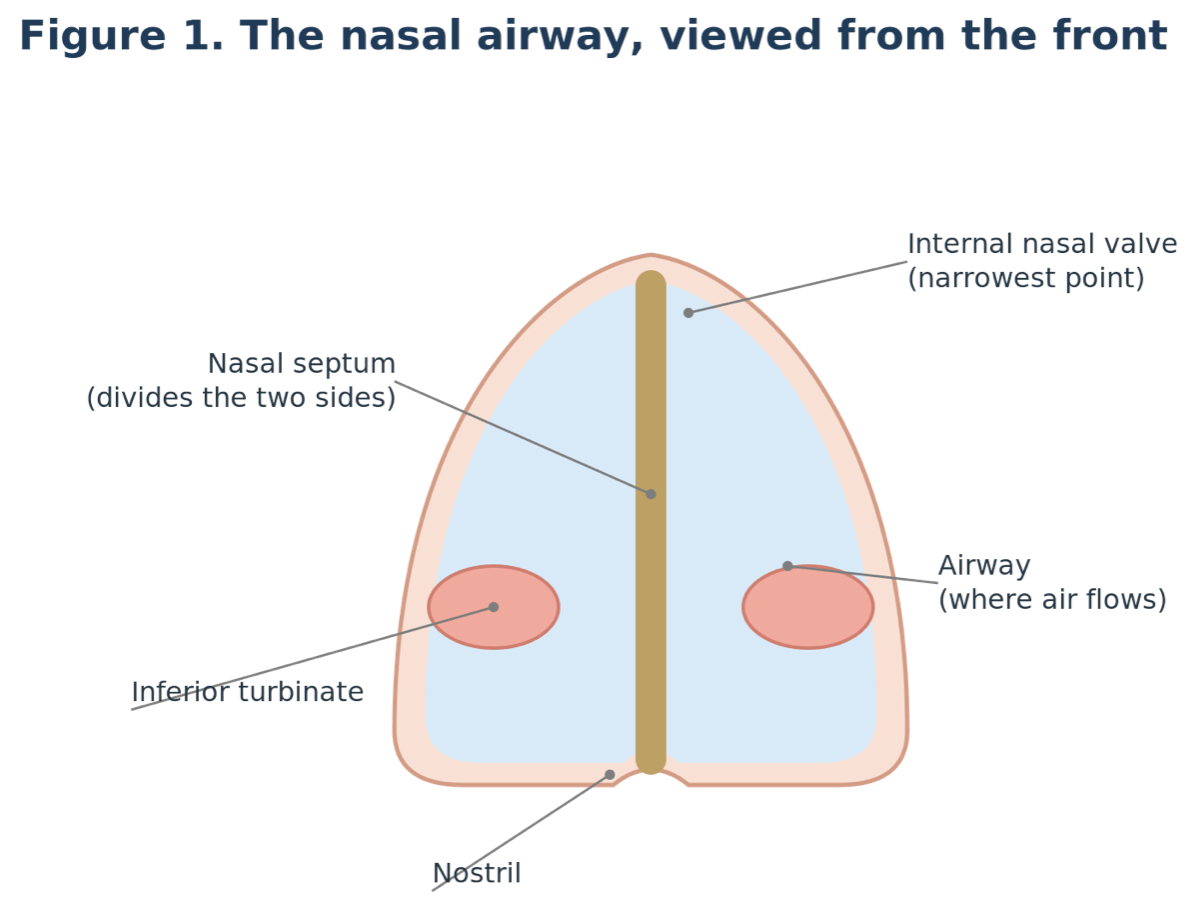
A front-on view of the nose: the septum divides the two airways, and the internal nasal valve is the narrowest point. (CLICK IMAGE TO VIEW LARGER)

Three structural problems account for most correctable obstruction: (1) a deviated septum, the bent partition dividing the two passages, narrows one or both sides; (2) enlarged inferiorturbinates, the scroll-shaped structures along the side walls that warm and filter air, crowd the airway, especially in chronic allergies; and (3) Nasal valve obstruction, the least understood, and often overlooked structural component.

The nasal valve is the narrowest part of the airway, so even small changes there have the greatest effect on breathing. The internal nasal valve is the angle—normally about ten to fifteen degrees—where the upper lateral cartilage meets the septum. The external nasal valve is the forward region near the nostril rim. The obstruction may be static, a permanently narrow passage, or dynamic, a sidewall that collapses inward with a brisk breath. Patients often notice the dynamic type when a deep breath makes breathing harder, or when suddenly pulling the cheek outward improves airflow. This is also why some patients who had septum surgery years ago may still feel blocked: an untreated nasal valve was the actual culprit.

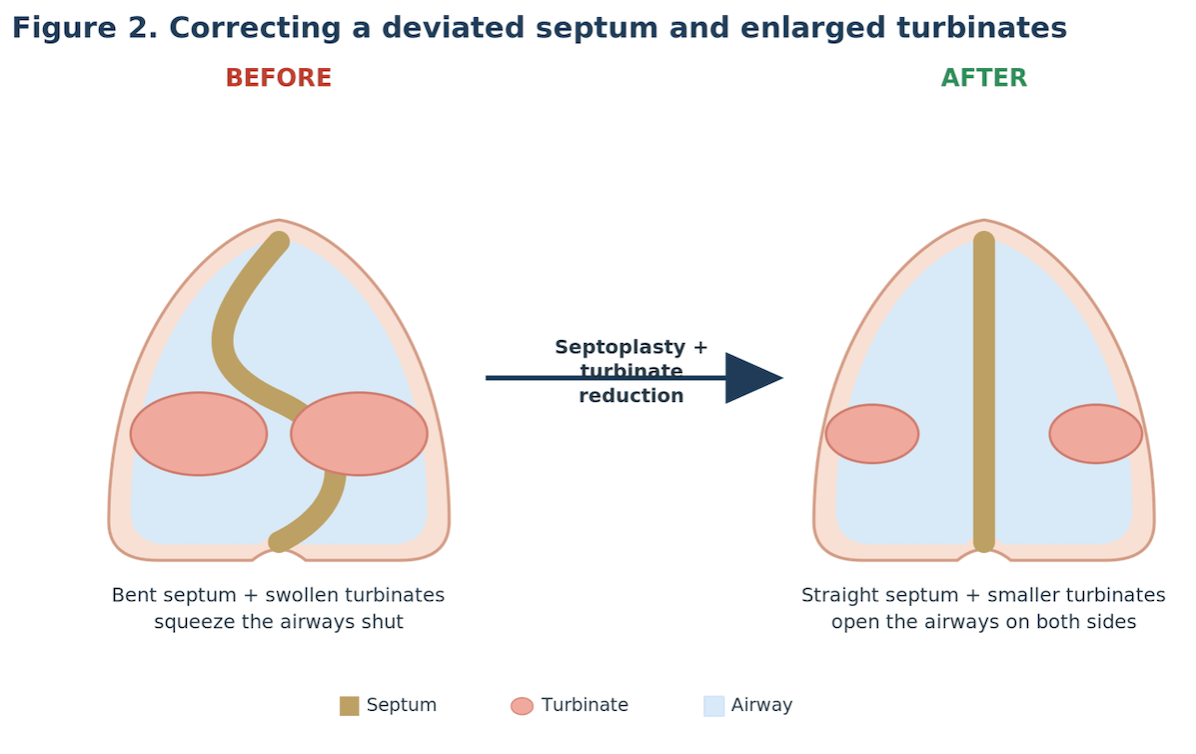
Before and after septoplasty and turbinate reduction: straightening the septum and shrinking the turbinates reopens both airways. (CLICK IMAGE TO VIEW LARGER)

Surgery is tailored to the specific defect. A septoplasty straightens the deviated septum by removing or repositioning obstructing cartilage and bone while preserving the support that maintains the nose’s shape. Turbinate reduction, or turbinoplasty, conservatively shrinks enlarged turbinates while sparing the lining, preserving humidification, and widening the airway.

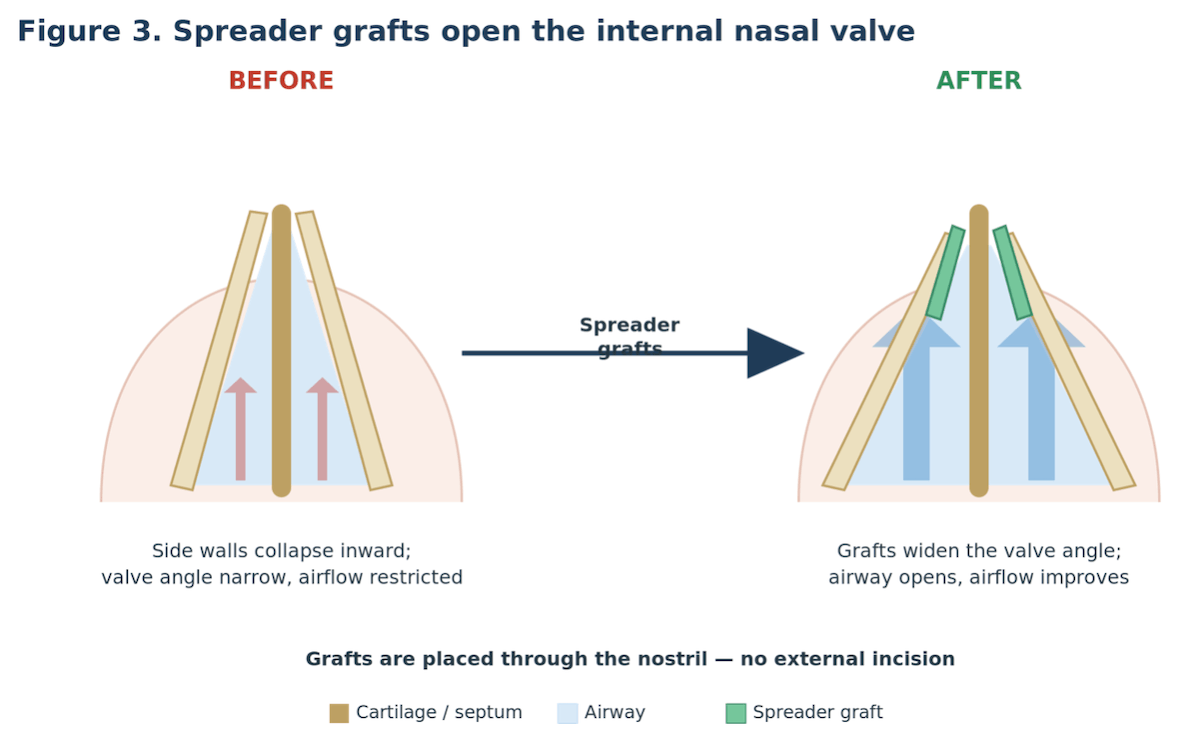
For internal nasal valve obstruction, the most durable correction is the spreader graft, a thin strut of the patient’s own cartilage, usually taken from the septum during the same operation and placed in the seam between the dorsal septum and the upper lateral cartilage. Acting as a spacer, this graft widens the valve angle and reinforces the middle of the nose, opening the airway and resisting the inward collapse that medication and adhesive strips cannot address. Because it uses the patient’s own tissue, it integrates naturally and is permanent.

Before and after spreader grafts: the grafts widen the internal nasal valve and open the airway, placed entirely through the nostril. (CLICK IMAGE TO VIEW LARGER)

These grafts can be placed through an endonasal, or closed, approach, working entirely through the nostrils, so there is no external incision and no change to the nose’s appearance. The procedure is typically outpatient, performed under anesthesia, often combined with septoplasty and turbinate reduction, so every contributing factor is corrected at once. When chronic sinusitis has not responded to medical therapy, endoscopic sinus surgery may be performed at the same time. Recovery usually consists of a week or two of swelling and congestion, and breathing improves as healing progresses. Because these operations relieve obstructed breathing rather than changing appearance, they are generally covered by insurance, though coverage depends on the plan and documentation of medical necessity.

No operation guarantees a perfect result; outcomes depend on accurate diagnosis, sound technique, and realistic expectations. The guiding principle is to evaluate the nose, lining, septum, turbinates, and valves, so treatment addresses the true sources of obstruction. For those who have struggled for years to breathe, that approach, and the option of restoring the nasal valve without external incisions, may mean easier breathing, better sleep, and a meaningful improvement in daily life.